
Congratulations to Anna Poliakoff from Hitchin Girls’ School and Hedy Diab from Goldington Academy for successfully making significant progress to the problem!
(a) suppose 
then 
as such 
then 
as such 
(b) by considering division by  , solve the quartic

(i)
first divide by , 
then sub in  ,

then find values for by solving the quadratic 

 or

(iia)
if then, 

then multiply by  ,

Then solve the quadratic

(iib)
if then, 

then multiply by , 
Then solve the quadratic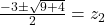

as such (b)



(c*) use a similar method in (b) to solve 
(i)
first divide by 


then expand 

as such 


using our results from part (a) and our expansion

(ii)
Then here is the crucial insight for (c*)
by introducing another variable 
we can repeat the process from part (b) to reach a quadratic.
first divide by 


then by expanding and subbing in  and






(iii)
as such  or

we will split into cases to improve clarity.
(iiia)
then multiply by 

(iiib)
then multiply by 


 or

leaving us with 4 cases
(1)


(2)


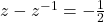
(3)


(4)



and finally we have our 8 solutions for
Before the solutions to (d) and (e), let’s delve deeper into the relationship of the roots. Consider one of the quadratic factors:
We start with the substitution

Suppose the original equation has roots

Consider what happens when we replace
with  in the expression for .
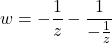


Therefore, the expression for
remains unchanged when is replaced by .Hence, if
 is a solution, then
 must also be a solution.
Thus, the roots occur in pairs of the form

This explains why the roots of the degree 8 polynomial are paired in this way.
Method 1: Root symmetry (avoids expansion)
The degree 8 polynomial is

Considering one quadratic factor:
It may now prove logical to find a relationship with
 as the root and
 .
Replacing
with gives 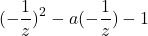
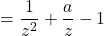
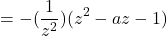
Therefore, each quadratic factor is multiplied by
 .
Since there are four factors, the entire expression is multiplied by

Hence,
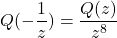
Multiplying by
 gives
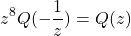
Now write the polynomial in its general form.

Substituting
and multiplying by gives 
Since this equals the original polynomial, comparing coefficients gives


Therefore, the coefficients read the same forwards and backwards when signs are ignored.
Method 2: Expanding the Polynomial
Method 1 describes a method to do this analytically, but we appreciate that it may be difficult. Since the problem asks for the 8th degree polynomial specifically we can do this by brute force albeit a lot of work.
After arduous expansion provides







The coefficients therefore read the same forwards and backwards when signs are ignored.
(e) As mentioned above, whenever
is a real solution, is also a real solution.This can also be seen from the coefficient relationship
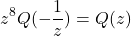
because
is never  due to the constant term.
Now suppose there is a real solution outside the interval
 .
If
 , then
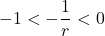
If
 , then

In either case,
lies inside the interval .This contradicts the condition that there are no solutions in
.Therefore, there can be no real solutions outside this interval either.
Hence, the polynomial would have no real solutions.