
Congratulations to Markus Kuan from Northstowe Secondary College and Matthew Whitten from The Cavendish School for successfully solving the problem!
Problem 34 will be out shortly later today.
ai) The worst case scenario before getting a pair of socks is if Steph picks one sock of each colour, so she now has  socks but no pair, if she picks another sock, she is guaranteed to have at least
  pair because the next sock that she picks must be one of the colours she has already picked out, so the minimum number of socks she must pick to gain a pair is
  .
.
aii) If Steph has socks of  different colours, similar to part ai, the worst case scenario is that Steph will have picked one sock of every colour, this means that she has picked out socks, by picking one more sock, she is guaranteed to form one pair of socks, therefore the minimum amount of socks she needs to pick is
  .
.
For those who are interested, this is an adaptation of the Pigeonhole Principle and can be proved as such:
When Steph picks out socks, there are only colours that each sock can fit into, by Pigeonhole Principle, since  , there must be at least one category (in this case – a colour) where there are
  socks that lies within.
b) There are ways that Steph can pick out a pair of socks. She can either pick out a pair of red, blue or yellow socks, we can calculate the probability of picking a pair of socks by considering the probabilities of picking a pair of a specific colour. This is what we call case analysis.
Case 1: Steph picks out a pair of red socks.
In order for Steph to pick out a pair of red socks on the first socks, both of the socks that she picks must be red.
The probability of the first sock being red is  , the probability of the second sock being red is
  , therefore the probability of picking red socks is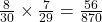
The probability of picking pairs of other colours can also be calculated in the same way.
Case 2: Steph picks out a pair of blue socks.
The probability of the first sock being blue is  , the probability of the second sock being blue is
  , therefore the probability of picking red socks is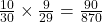
Case 3: Steph picks out a pair of yellow socks.
The probability of the first sock being yellow is  , the probability of the second sock being yellow is
  , therefore the probability of picking red socks is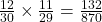
The probability of Steph picking out a pair of socks is then the sum of the probabilities of picking a pair of specific colours, therefore, the probability of picking a pair of socks on the first socks is  which simplifies to